What to Do on the Hard Days: 5 Activities That Work Even When Nothing Seems To
On a hard day the bar is different. Five small, familiar, calm things that can get through when the activity book stays closed and every suggestion meets agitation.
You know the day I mean. Nothing worked before ten in the morning. The activity book stayed closed. The favorite show didn’t hold their attention past two minutes. Every suggestion you made got met with agitation instead of interest, and by lunchtime you were standing in the kitchen wondering if you’d somehow forgotten how to do this job, after doing it for years.
I want to tell you something I wish someone had told me earlier in this work: those days aren’t a sign you’re doing something wrong. There’s an actual concept caregiving researchers use for this, something like a stress threshold — the idea that a person living with dementia starts each day with a certain amount of tolerance for stimulation and demands, and that tolerance gets used up as the day goes on. Poor sleep, a change in routine, a room that’s too loud, too many decisions in a row — all of it draws down the same tank. By early afternoon on a hard day, that tank is just empty, and nothing you offer is going to land the way it would on a good morning.
So the goal on a hard day isn’t to find the perfect activity. It’s to find something small enough, familiar enough, and calm enough to actually get through to someone whose tank is already low. Here’s what’s actually worked, for me and for the families I’ve spent time with.
1. A simple, physical task their hands already know
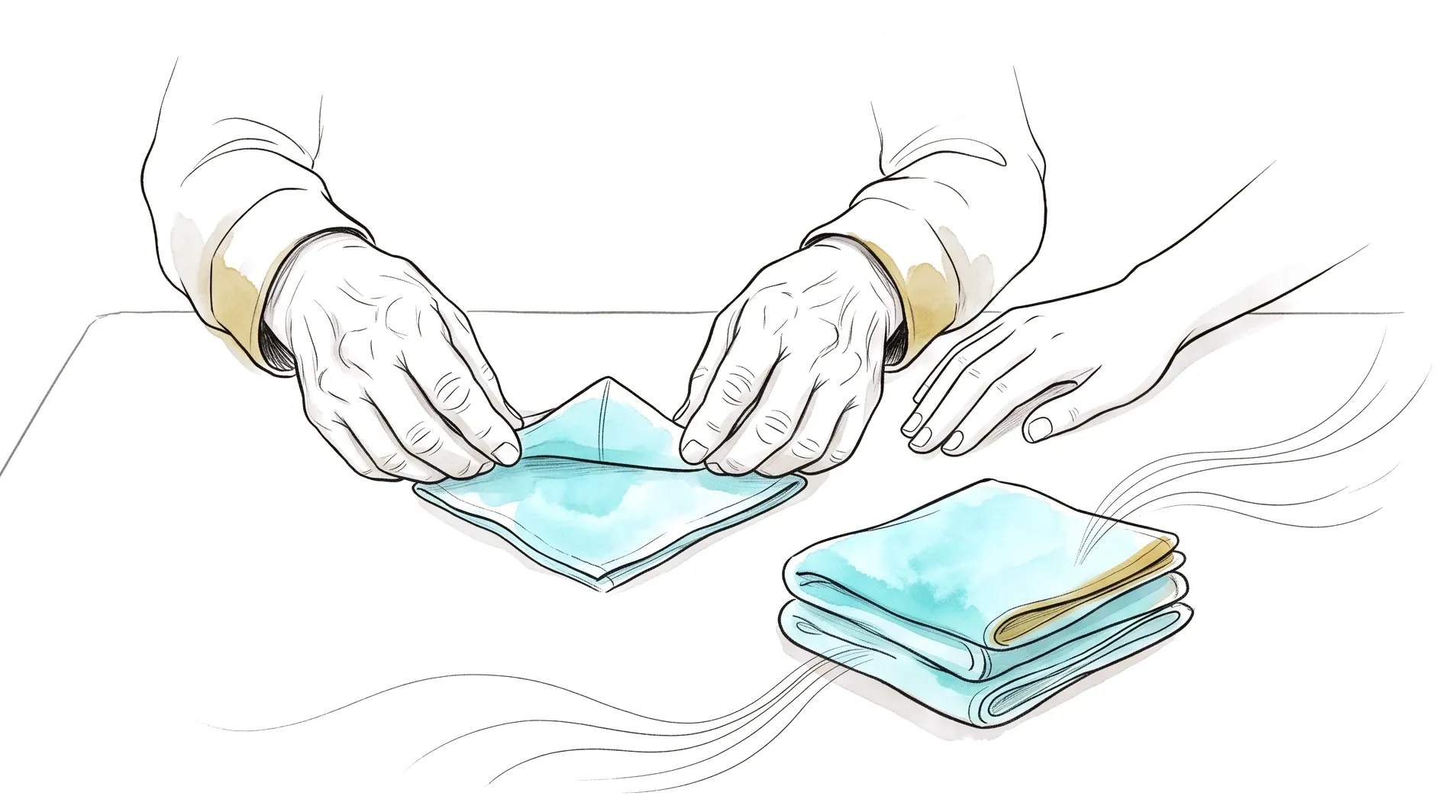
This is the one that surprises people most. On a day when nothing conversational or puzzle-based is landing, a plain physical task — folding washcloths, sorting a drawer of buttons, wiping down a table, rolling silverware into napkins — will sometimes work when everything else has failed.
There’s a real reason for this, and it’s not just luck. The kind of memory that lets us do familiar physical tasks tends to stay intact much longer than the kind of memory needed for conversation or new instructions — it’s a different system in the brain entirely, and it’s usually one of the last things affected. That’s why a task the hands have done thousands of times before can still feel doable on a day when almost nothing else does. Keep it to one step, keep it repetitive, and don’t correct the outcome. It doesn’t matter if the towels get refolded five times.
2. Music that belongs to them specifically
I want to be honest here: not everything people assume is calming actually holds up. Some of the soothing stuff — background nature sounds, generic “relaxing” playlists — really doesn’t move the needle much in what’s been studied. But music built around a person’s own specific history is a different story. Their wedding song, the record that was always on in the kitchen, whatever they sang along to badly and happily for forty years — that kind of music has real research behind it for calming agitation, and I’ve watched it work in real rooms more times than I can count. Skip the generic “songs from their era” playlist. Go specific.
3. Turn the room down before you try anything else
This one isn’t an activity, it’s a first move. On a hard day, the instinct is often to try harder — more suggestions, more cheerful energy, more attempts to redirect. But when someone’s already past their limit, more of anything usually makes it worse. Turn off the TV. Close a door if there’s noise from another room. Sit down instead of hovering. Sometimes the actual intervention is subtraction, not addition — lowering what’s being asked of them before you try to add anything back in.
4. A short walk, even just to another room
If the person can move safely, a change of scenery and a bit of physical movement is one of the more consistently useful tools on a hard day, even when it’s brief. It doesn’t need to be a real walk outside — sometimes it’s just moving from a loud room to a quiet one, or standing at a window for a minute. The activity itself matters less than the fact that it breaks the loop that’s building.
5. Touch, when words aren’t landing
When someone is too overwhelmed for conversation or activity of any kind, simple physical comfort — holding a hand, a slow hand or shoulder rub, sitting close without asking for anything back — tends to do something that talking can’t. This is one of the better-supported calming tools for moments of real distress, and it asks nothing of the person receiving it. No task, no decision, no performance. Just presence.
The bar for a hard day is different
On a good day, you might be looking for something engaging, challenging, maybe even fun. On a hard day, the bar is just: did this bring the temperature down a little. That’s enough. That’s actually the win.
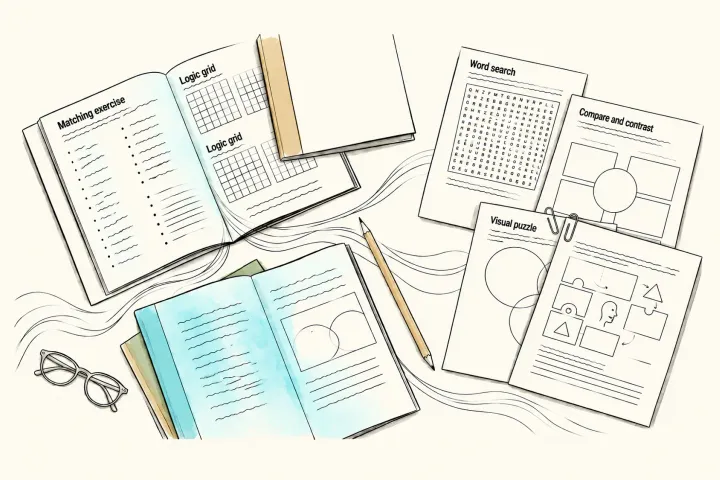
If you’re looking for something low-pressure to have on hand for the good days that follow the hard ones — something familiar, repetitive, and genuinely enjoyable once the tank has refilled a bit — our Memory Games Collection is built exactly for that kind of quiet, doable engagement. Take a look at the collection here.