Memory Games for Seniors: What They Are, How They Work, and Where to Start
The honest version of memory games for seniors: what they are, what the research actually shows, and how to start with someone you care about.
Somebody always asks me this eventually — usually a son or daughter, sometimes a spouse — “should we be doing memory games?” And I get why the question comes up loaded with hope. It sounds like something concrete you can actually do, unlike most of what aging throws at a family, which mostly can’t be fixed with an activity.
So let me give you the honest version of this, not the version that oversells it. Memory games do help. They’re just not magic, and knowing the difference matters, because it changes how you’ll actually use them.
What memory games actually are
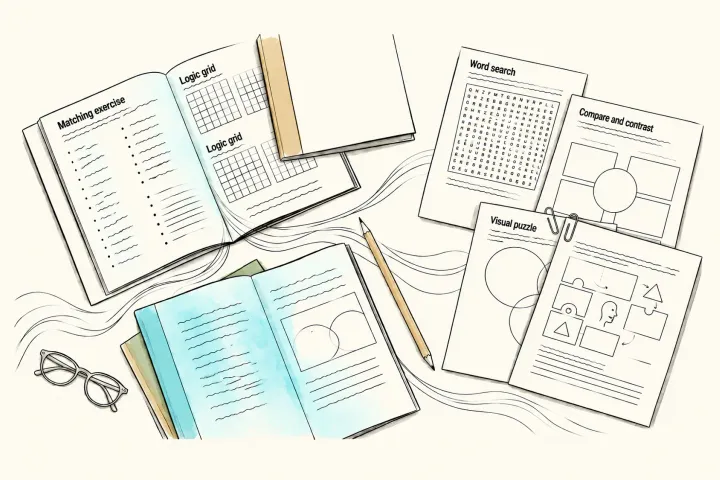
When people say “memory games,” they usually mean one of a handful of things, and it’s worth knowing the categories because they don’t all work the same way:
- Recall games — the classic concentration/matching card game, where you flip two cards and try to remember what’s where. This trains short-term recall directly.
- Sequencing games — anything where you have to remember and repeat a growing pattern or order, like a simple version of Simon, or games that ask you to recall a list in the right order.
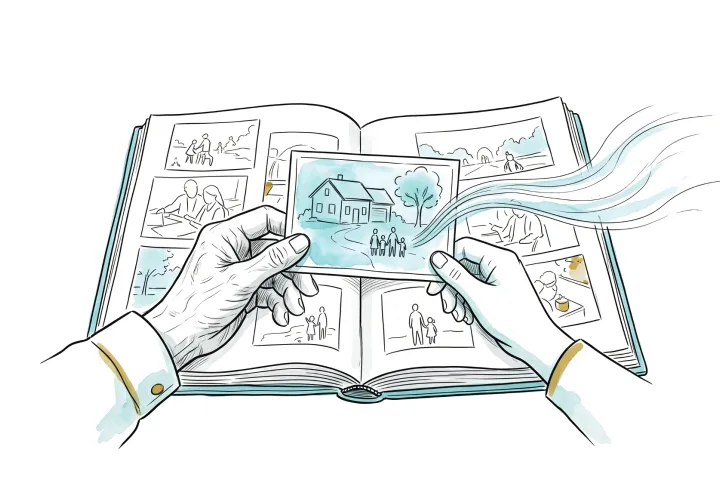
- Association games — matching a name to a face, a word to a picture, that kind of pairing. These lean on a different mental muscle than pure recall — they’re about building a link, not just holding something in your head for a few seconds.
- Reasoning and pattern games — things like simple logic puzzles, categorization games, or “what comes next” pattern sequences. Technically not “memory” games at all, but they usually get lumped in, and it turns out that’s not a bad instinct — I’ll get to why.
Why staying mentally active matters in the first place
Before I get into specific games, I want to back up, because there’s a bigger piece of research here that explains why this is worth doing at all, beyond any one game.
It’s called cognitive reserve, and the researcher most associated with it is a neuropsychologist named Yaakov Stern at Columbia. The idea, in plain terms: a lifetime of mentally engaging activity builds up a kind of buffer in the brain — a capacity to keep functioning normally even after age-related changes or early disease processes have already started. It’s not that engaged brains don’t age. It’s that they can tolerate more of that aging before it shows up as real trouble.
The numbers behind this are bigger than I expected the first time I looked into it. A review out of the University of New South Wales pooled data from 29,000 people across 22 studies worldwide and found that people with high cognitive reserve had a 46% lower risk of dementia compared with people with low reserve. And more recent research — a 2024 review pulling together the current evidence — found something particularly useful for actually choosing what to do: the activities that seem to matter most aren’t just “any” mental activity, but ones that involve real novelty and genuine challenge. Doing the exact same easy crossword every single day isn’t nothing, but it’s not pulling its full weight either.
That’s the actual reason memory games are worth your time — not because one specific game will sharpen your memory forever, but because staying in the habit of genuine mental engagement, over years, is one of the better-supported things a person can do for their long-term brain health.
How the games themselves work
Here’s where I want to be straight with you about the day-to-day specifics, because there’s a really large, well-known study on exactly this question, and its results are more interesting — and more honest — than most of what gets said about “brain games.” It’s called the ACTIVE study — Advanced Cognitive Training for Independent and Vital Elderly — funded by the National Institute on Aging, and it’s the biggest trial of its kind ever run.
Researchers followed close to three thousand older adults, split into groups that each got a short course of training — one group in memory, one in reasoning, one in processing speed — and then tracked all of them for ten years. Ten years is a long time for a study like this, and it’s rare to get data that goes out that far. The results were published in the Journal of the American Geriatrics Society in 2014.
What they found: the reasoning group and the processing-speed group held onto real, measurable gains a full decade later. The memory group, though — the improvements specific to memory itself faded out over that same decade. That’s not the headline anybody wants, but it’s the honest one, and I’d rather tell you the truth than sell you something.
Here’s the part that actually matters for you, though: even in the group where the specific memory gains faded, people in all three training groups reported doing better with everyday tasks — daily activities, managing life — at the ten-year mark than people who’d gotten no training at all. So the narrow skill faded a bit, but something real stuck around in how people actually functioned day to day.
The other honest thing worth knowing: getting better at a specific memory game mostly makes you better at that game, and things very similar to it — not at memory in general. Researchers call this the difference between “near transfer” and “far transfer,” and the evidence for far transfer — meaning a card-matching game making someone sharper across the board — is thin. That doesn’t mean the games are pointless. Put together with the cognitive reserve research above, it means the value isn’t any single game “fixing” anything. The value is the habit itself, built consistently, with real variety over time.
I saw this play out with a client of mine a few years back — a retired schoolteacher, sharp as anything, who’d waved off every activity book I ever brought her as “busywork.” What actually got her was a simple matching card game, because it turned out she’d played almost the exact same game with her own students for thirty years. She wasn’t interested in “brain training.” She was interested in something that felt like her own life. Once that door opened, she was willing to try the harder stuff — word puzzles, a logic game or two — that she’d refused outright a month earlier. The game that got her started almost never looked like the game that kept her going, and I think that’s true more often than families expect.
Where to actually start
Given all that, here’s how I’d suggest starting, if you’re new to this with someone you care about.
Start with something they already recognize — then branch out on purpose. A senior who played cards their whole life will take to a matching game faster than one who never has, simply because there’s less friction getting started. Don’t pick the “best” game on paper — pick the one closest to something familiar. But don’t stop there: remember that novelty and real challenge are what the research says actually matters most over time, so once the habit is in place, deliberately rotate in something new every few weeks rather than doing the same familiar game forever.
Keep sessions short and regular, not long and rare. Fifteen minutes a few times a week beats one long session every couple of weeks. The research consistently points toward consistency mattering more than intensity.
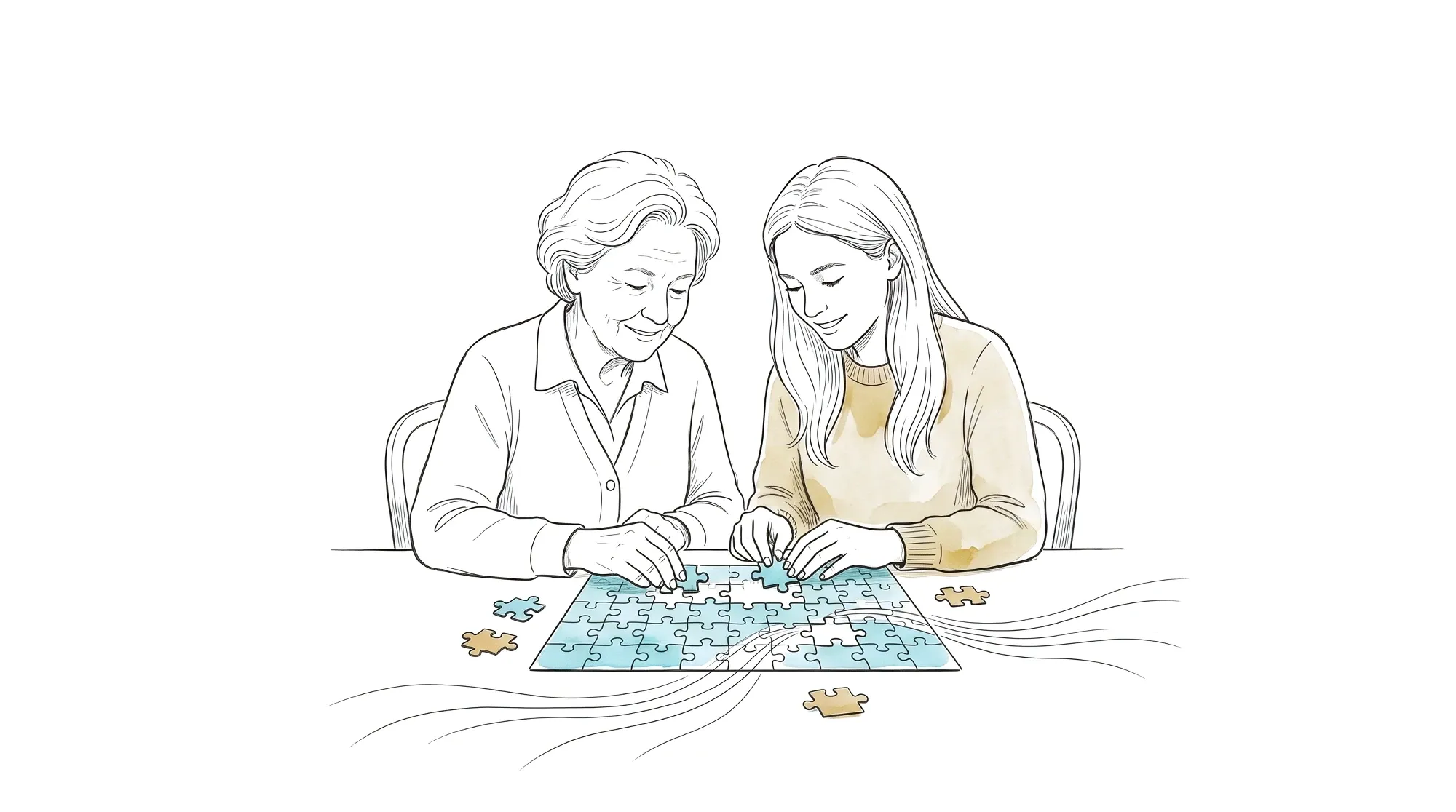
Do it with someone, at least at first. Games played together — not solo against an app — tend to stick better as a habit, and they give you a natural read on whether the difficulty level is actually right, instead of guessing.
Let the difficulty move with them. A game that’s too easy gets boring fast; too hard gets frustrating fast. Both of those kill the habit before it forms. Adjust as you go instead of committing to one fixed level.
Don’t chase the promise of “reversing decline.” Go in expecting engagement, connection, and a real mental workout — not a cure. That’s not a smaller reason to do it. In my experience, it’s actually the reason people stick with it, because it’s a promise that holds up over time instead of one that eventually disappoints.
If you’re looking for a place to start that’s built around exactly this — real engagement, gradually building difficulty, and activities people actually want to come back to — our Memory Games Collection was designed with all of this in mind. Take a look at the collection here.