Nostalgia Trivia for Seniors: Why Going Back in Time Is Good for the Mind
What happens when a trivia question unlocks a 50-year-old memory? What the research on nostalgia and reminiscence says, and ten questions to get the conversation started.
What happens when a trivia question unlocks a 50-year-old memory?
What was the first song you remember dancing to? Which television show did you never miss? Do you remember the price of a movie ticket when you were young?
For many older adults, questions like these are about much more than getting the right answer.
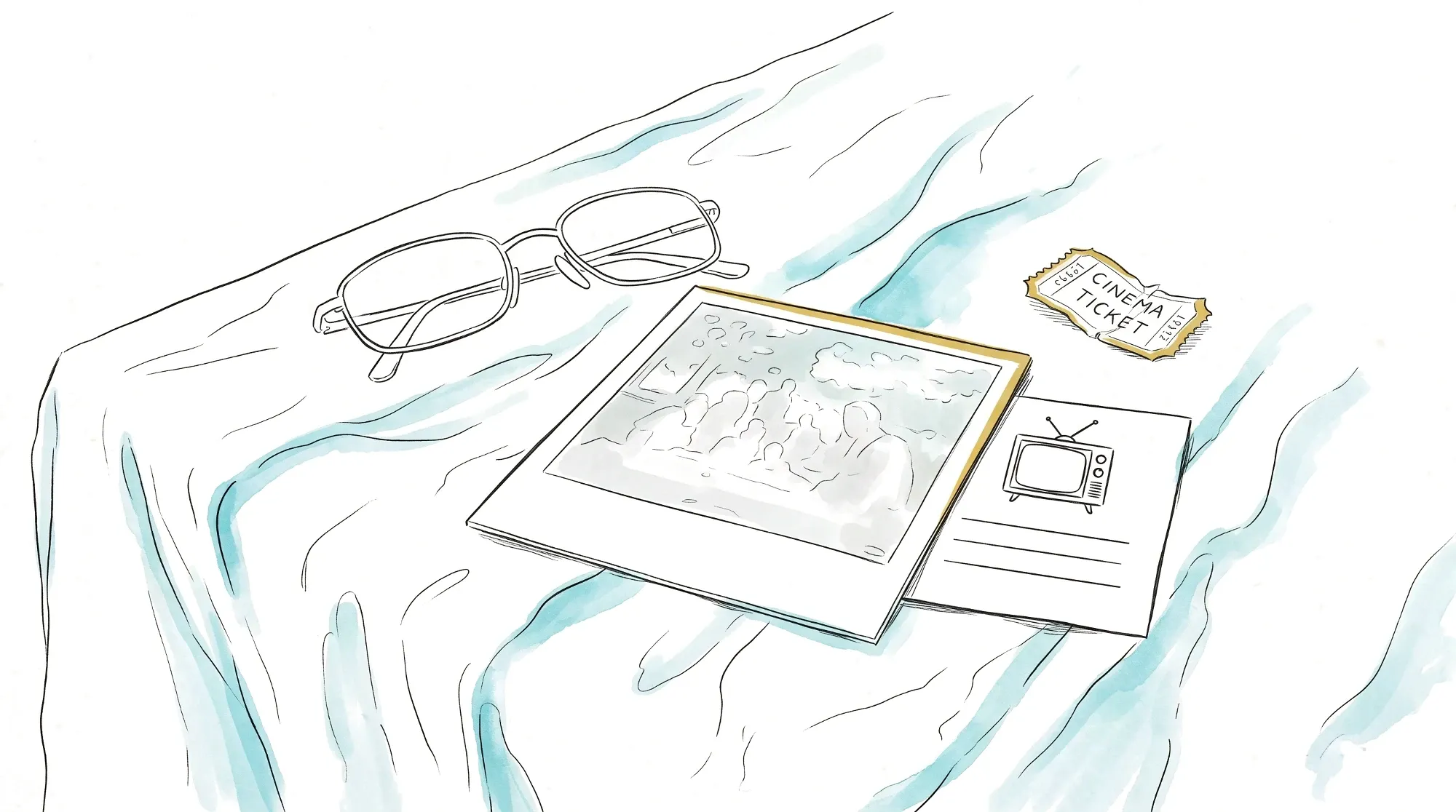
A question about an old song can bring back the sound of a particular voice, the feeling of being young, a first date, a family gathering or a night spent with friends. One memory can quickly lead to another — and suddenly, a simple trivia question has become a story about a life.
That is part of what makes nostalgia trivia so interesting for seniors. It combines the fun of a quiz with something deeply personal: memories from the past.
And research into reminiscence — the process of recalling and reflecting on past experiences — suggests that looking back can have benefits for cognitive and emotional well-being in older adults.
What is nostalgia, and why does it matter as we age?
Nostalgia is often described as a sentimental longing for the past. Unlike simply remembering a fact, nostalgic memories tend to be personal, emotional and connected to other people.
Researchers have found that nostalgia can strengthen a person’s sense of continuity between their past and present selves. In a series of six experiments, researchers found that nostalgia increased feelings of social connectedness, which in turn contributed to a stronger sense of self-continuity and greater eudaimonic well-being (Sedikides et al., 2016).
In other words, looking back can help people feel that the person they were decades ago is still connected to who they are today.
That may be especially meaningful later in life, when people have accumulated decades of experiences, relationships and milestones.
A childhood song is not simply a song anymore. It may be connected to a particular home, a parent, a school dance or a friend. A question about a favorite movie may bring back memories of going to the cinema with a spouse. A question about an old television program may lead to stories about family life.
The factual answer is only the beginning.
Why trivia can turn into a memory workout
At first glance, trivia may seem like simple entertainment. But answering a question requires the brain to search for information and connect clues with stored memories.
Consider a question such as: “Who sang this popular song in the 1960s?”
The person may not immediately remember the name. Instead, they may remember the melody, the singer’s voice, where they heard the song, or who they were with.
That process can turn a factual question into a much broader exercise in remembering.
Research on reminiscence therapy provides some evidence for this broader idea. A 2025 systematic review and meta-analysis examined 18 studies, including 19 trials, and found a significant positive effect of reminiscence therapy on cognitive function in older adults with cognitive impairment. The effects were particularly strong among people with mild cognitive impairment (Huang et al., 2025).
The researchers also found that group sessions conducted weekly for 30–45 minutes showed particularly favorable results in their subgroup analyses (Huang et al., 2025).
However, there is an important distinction: these studies examined structured reminiscence interventions, not ordinary trivia games. So nostalgia trivia should not be described as a proven treatment for memory problems.
What the research does suggest is that activities involving the recall and discussion of personal memories may provide meaningful cognitive stimulation.
The question isn’t always about the answer
One of the most interesting things about nostalgia trivia is that a wrong answer does not necessarily mean the activity has failed.
Imagine asking: “What was your favorite singer when you were 20?”
A participant might forget the singer’s name. But they may remember the song. Then they may remember where they heard it. Then they may remember the person they were dating at the time.
The conversation has moved from trivia to autobiographical memory.
This is one reason nostalgia-based activities can be different from conventional quizzes. The goal does not have to be perfect recall.
Sometimes the most valuable part of the activity is everything that happens after the question.
From “I know this!” to “Let me tell you a story”
A good nostalgia question can open a door.
Ask someone about a popular song from their youth and they may tell you about their first dance. Ask about a famous movie and they may remember the theater they used to visit. Ask about a historic event and they may remember exactly where they were when they heard the news.
This connection between memory and storytelling is important because reminiscence is not only about cognition. It can also have psychological and social dimensions.
A 2023 systematic review and meta-analysis looked at 27 studies involving 1,755 older adults without obvious cognitive impairment. The researchers found that reminiscence therapy had significant effects on reducing depressive symptoms and improving life satisfaction (Xu et al., 2023).
Another 2023 meta-analysis, covering 32 studies and 2,353 participants, found significant improvements in both quality of life and life satisfaction among older adults who participated in life-review or reminiscence interventions (Zhong et al., 2023).
These findings help explain why a simple conversation about the past can be meaningful.
The activity is not just about retrieving information. It can also provide an opportunity to share experiences, express emotions and reconnect with important parts of one’s identity.
Nostalgia can help connect the past with the present
There is another reason nostalgia may matter.
As people age, their past becomes increasingly rich with experiences. Looking back can create a sense of continuity: That was me then, and this is me now.
Research on nostalgia supports this idea. In six experiments, nostalgia was found to promote self-continuity partly by increasing social connectedness. The researchers also linked nostalgia-induced self-continuity with greater subjective vitality, or a feeling of being alive and energetic (Sedikides et al., 2016).
That does not mean that every nostalgic memory automatically improves well-being.
But it suggests that nostalgia can serve a psychological function. It can remind people of relationships, experiences and identities that remain meaningful.
This is particularly relevant to nostalgia trivia because the best questions are often not random facts. They are prompts connected to a person’s own era and experience.
The sweet spot: questions from “your” era
Not all trivia is equally engaging.
For a senior who grew up in the 1950s, questions about contemporary pop culture may be less meaningful than questions about the music, movies, television and events that shaped their youth.
That does not mean trivia should be limited to one decade. Instead, it should reflect the participant’s life.
Good nostalgia trivia might include:
- Popular songs and singers
- Classic movies
- Television shows
- Famous actors
- Sports stars and teams
- Historical events
- Childhood games
- Old advertisements and slogans
- Fashion trends
- Cars
- Food and restaurants
- School life
- Family traditions
- Places that have changed over time
The strongest questions often have two layers.
The first layer asks for information: “Who sang this song?”
The second invites a personal memory: “Did you listen to that song when you were young?”
The first tests recall. The second starts a conversation.
Why group trivia may be more than a game
Nostalgia trivia can also become a social activity.
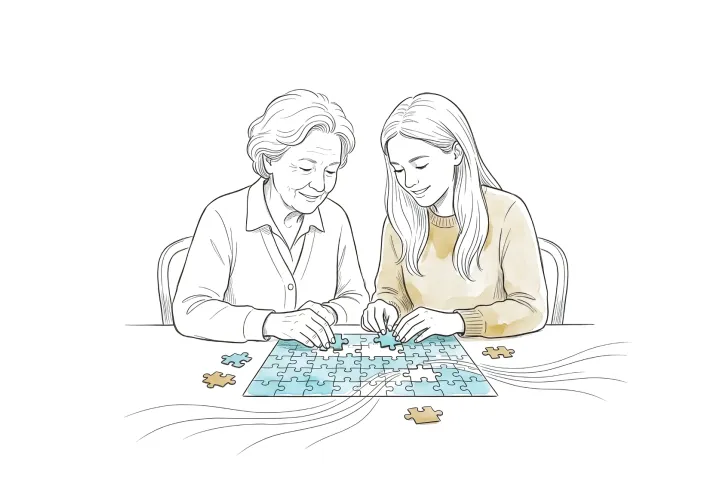
A group sitting around a table may disagree about an answer, laugh about a forgotten television show or discover that several people attended the same concert decades ago.
The social element matters because reminiscence interventions are often delivered in group settings, and research suggests that group reminiscence can have positive psychological effects.
A 2023 systematic review found that reminiscence therapy had significant effects on depression and life satisfaction among older adults, with group reminiscence showing a significant role in improving life satisfaction (Xu et al., 2023).
More recent research has also examined different ways of delivering reminiscence therapy. A 2025 systematic review and network meta-analysis included 53 randomized controlled trials involving 4,582 participants and found that reminiscence therapy was associated with improvements in cognitive function, depressive symptoms and quality of life, although effects varied according to the delivery format (Pu et al., 2025).
Again, these studies do not prove that a weekly trivia night will produce the same results.
They do, however, reinforce the idea that remembering together can be a meaningful activity, rather than simply a way to pass the time.
Nostalgia trivia is not a treatment for dementia
This distinction is important.
It would be tempting to say that nostalgia trivia “prevents dementia” or “keeps Alzheimer’s away.” The current evidence does not justify those claims.
Research has found promising effects from reminiscence interventions, including improvements in some measures of cognition, mood and quality of life. For example, a 2015 meta-analysis of 12 randomized controlled trials involving older adults with dementia found a small effect on cognitive function and a moderate effect on depressive symptoms. However, the researchers did not confirm long-term effects on cognition or depressive symptoms (Huang et al., 2015).
More recent research has continued to report promising results. A 2025 meta-analysis of randomized controlled trials found that reminiscence therapy improved cognitive function in older adults with cognitive impairment, with particularly strong effects reported among participants with mild cognitive impairment (Huang et al., 2025).
But these studies are investigating structured interventions, often delivered over multiple sessions.
That is very different from claiming that answering a few questions about old movies will prevent cognitive decline.
The more accurate — and arguably more interesting — conclusion is that nostalgia trivia can be one enjoyable way to encourage memory recall, conversation and social connection.
How to make nostalgia trivia more meaningful
If the goal is to encourage memories rather than simply keep score, the way questions are written matters.
Make the questions familiar. Choose cultural references that participants are likely to recognize.
Give clues. If someone cannot remember an answer, offer a song lyric, an actor’s name, a decade or another clue. The objective is to encourage recall, not create frustration.
Mix facts with personal questions. Follow a factual question with a memory prompt. For example — Trivia: “Which actor starred in this classic movie?” Memory prompt: “Did you see it when it first came out?”
Give people time. Memory retrieval is not a race. Allowing people to think, discuss possibilities and listen to other people’s memories can make the experience more enjoyable.
Don’t make winning the whole point. Competition can be fun, but nostalgia trivia can work especially well when the emphasis is on stories and shared experiences.
Sometimes the best response to a question is not “Correct!” It is “Tell me more about that.”
10 nostalgia trivia questions to get the conversation started
- What song reminds you most of your teenage years?
- Who was your favorite singer or band when you were young?
- What television show did you never want to miss?
- What was the first movie you remember seeing in a theater?
- What was your favorite childhood game?
- Which famous historical event do you remember watching or hearing about?
- What fashion trend from your youth do you remember most?
- What advertisement or commercial jingle can you still remember?
- What was your favorite place to go with friends when you were young?
- What song could you still sing from beginning to end?
The questions themselves are simple. The stories they produce may be anything but.
Looking back doesn’t mean living in the past
Nostalgia is sometimes portrayed negatively — as if remembering the past means someone is stuck there.
Research paints a more nuanced picture.
Nostalgia can help people connect their past and present selves, strengthen feelings of social connectedness and contribute to psychological well-being (Sedikides et al., 2016).
Reminiscence interventions have also been associated with improvements in cognitive function, mood, life satisfaction and quality of life in different groups of older adults, although the strength of the evidence and the effects vary between studies (Xu et al., 2023; Zhong et al., 2023; Huang et al., 2025).
That makes nostalgia trivia interesting for a reason that goes beyond entertainment.
It gives people a reason to remember.
And remembering can lead to something even more valuable: telling a story, sharing an experience, laughing about something that happened decades ago or discovering that someone else remembers the same moment.
The goal isn’t to remember everything. It’s to remember what matters.
A nostalgia trivia game may begin with a question about a singer, a movie or an old television show.
But the real value may lie somewhere else.
It may be in the moment when someone suddenly remembers a dance from 60 years ago. Or the friend they have not thought about in years. Or the first car they ever owned. Or the song that played during an important moment in their life.
The answer to the trivia question might be forgotten again tomorrow. The story that follows it may be worth remembering.
And that may be the most compelling reason to look back: not because the past is better than the present, but because the past is part of who we are today.
If you’d like a book built around exactly this — music, trivia and iconic moments from the 1950s through the 1980s, and the personal memories they unlock — our Memory Lane Collection is on its way. See what’s coming.
Scientific sources
- Sedikides, C., Wildschut, T., Cheung, W.-Y., Routledge, C., Hepper, E. G., Arndt, J., … & Vingerhoets, A. J. J. M. (2016). Nostalgia fosters self-continuity: Uncovering the mechanism (social connectedness) and the consequence (eudaimonic well-being). Emotion, 16(4), 524–539. https://doi.org/10.1037/emo0000136
- Xu, L., Li, S., Yan, R., Ni, Y., Wang, Y., & Li, Y. (2023). Effects of reminiscence therapy on psychological outcome among older adults without obvious cognitive impairment: A systematic review and meta-analysis. Frontiers in Psychiatry, 14:1139700. https://doi.org/10.3389/fpsyt.2023.1139700
- Zhong, Q., Chen, C., & Chen, S. (2023). Effectiveness on quality of life and life satisfaction for older adults: A systematic review and meta-analysis of life review and reminiscence therapy across settings. Behavioral Sciences, 13(10), 830. https://doi.org/10.3390/bs13100830
- Huang, H.-C., Chen, Y. T., Chen, P. Y., Hu, S. H.-L., Liu, F., Kuo, Y. L., & Chiu, H.-Y. (2015). Reminiscence therapy improves cognitive functions and reduces depressive symptoms in elderly people with dementia: A meta-analysis of randomized controlled trials. Journal of the American Medical Directors Association, 16(12), 1087–1094. https://doi.org/10.1016/j.jamda.2015.07.010
- Huang, X., Ye, C., Zhao, A., Wang, Z., Zuo, S., & Lin, L. (2025). Effects of reminiscence therapy on cognitive function in older adults with cognitive impairment: A systematic review and meta-analysis of randomized controlled trials. Archives of Gerontology and Geriatrics, 139, 106021. https://doi.org/10.1016/j.archger.2025.106021
- Pu, Y., Zhang, G., You, S., Gains, H., Huang, K., Jiao, Y., He, R., Han, B., Yang, H., & Jia, Y. (2025). Reminiscence therapy delivery formats for older adults with dementia or mild cognitive impairment: A systematic review and network meta-analysis. International Journal of Nursing Studies, 167, 105084.